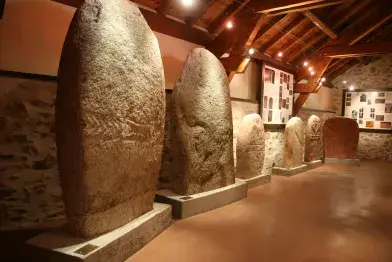
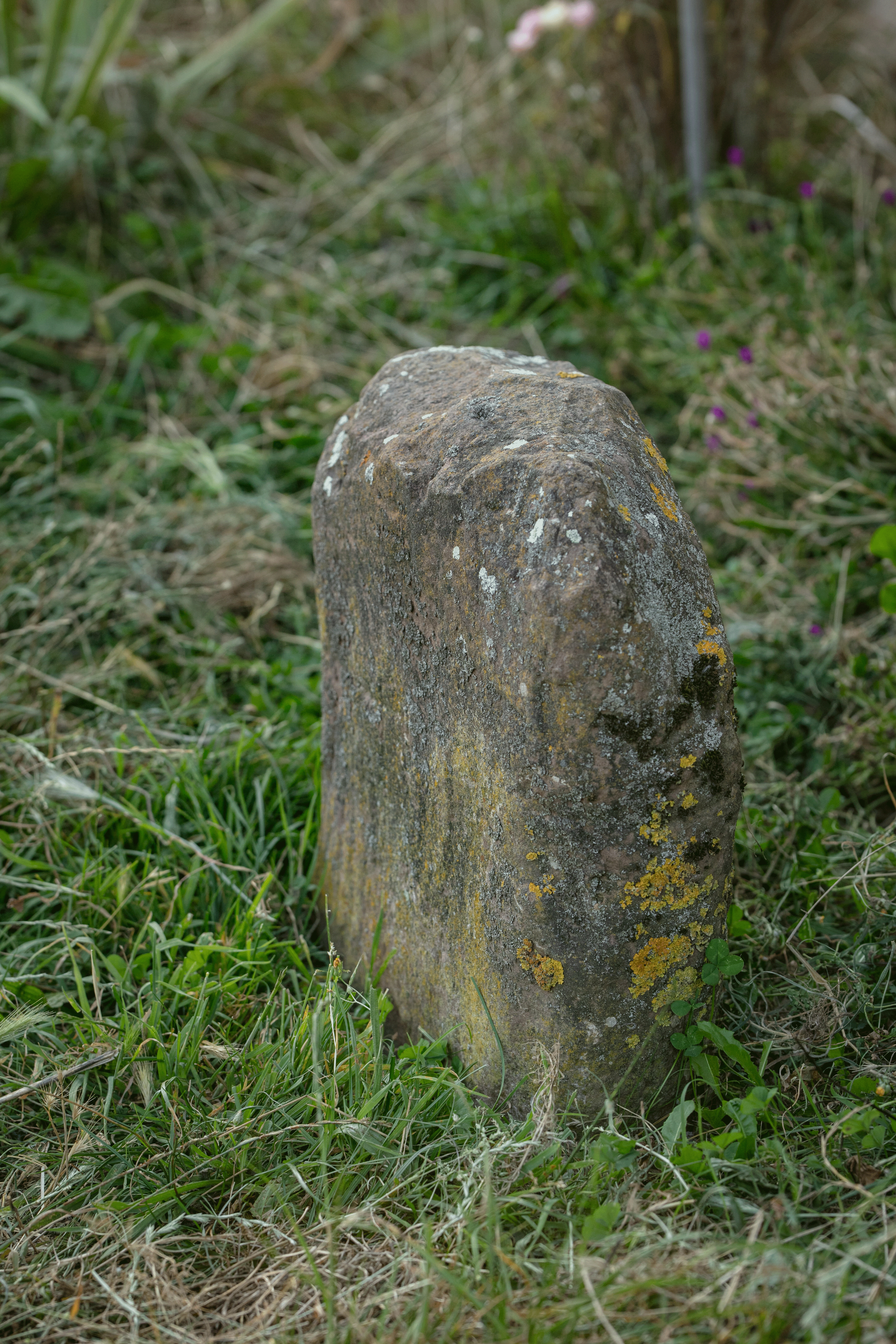
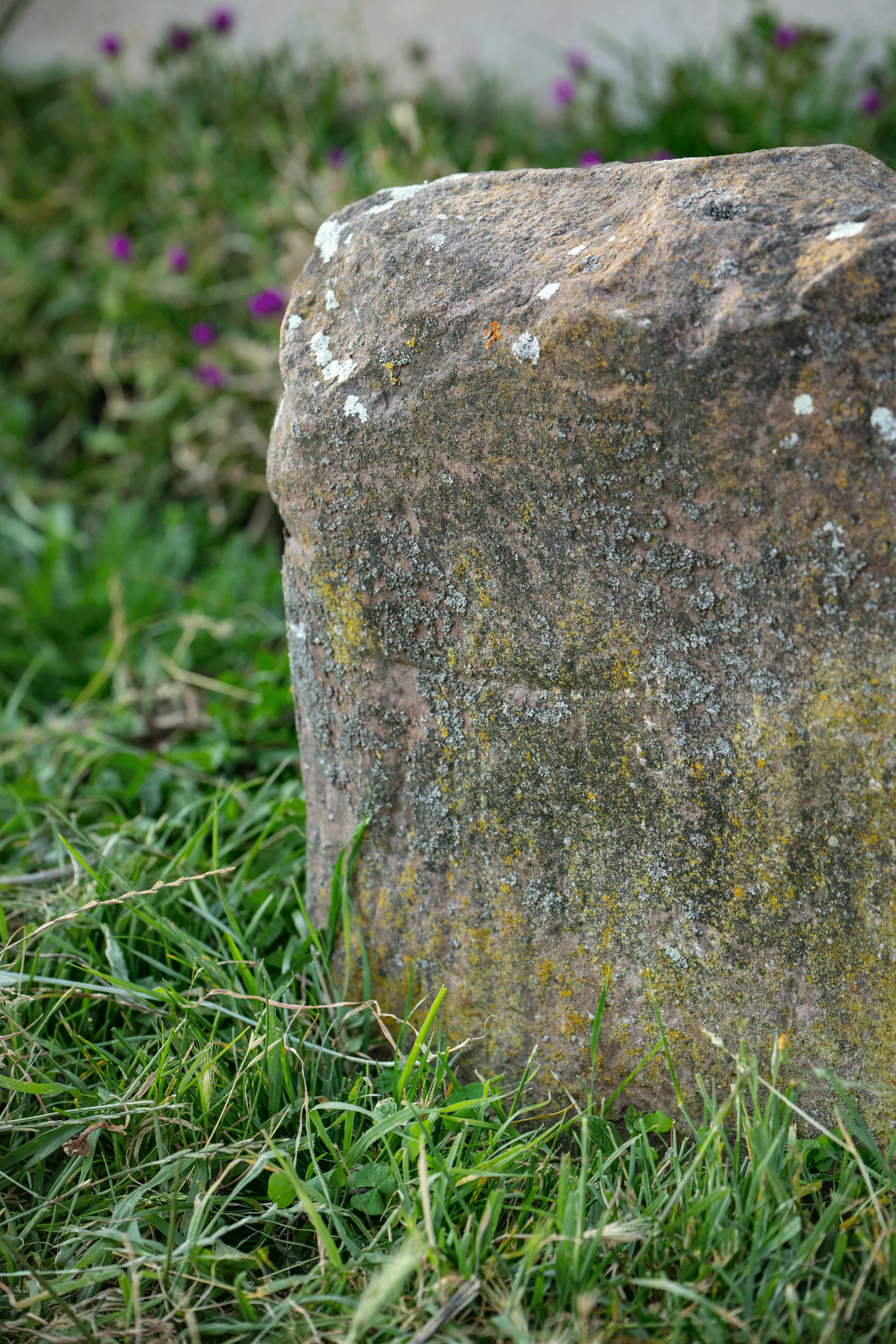
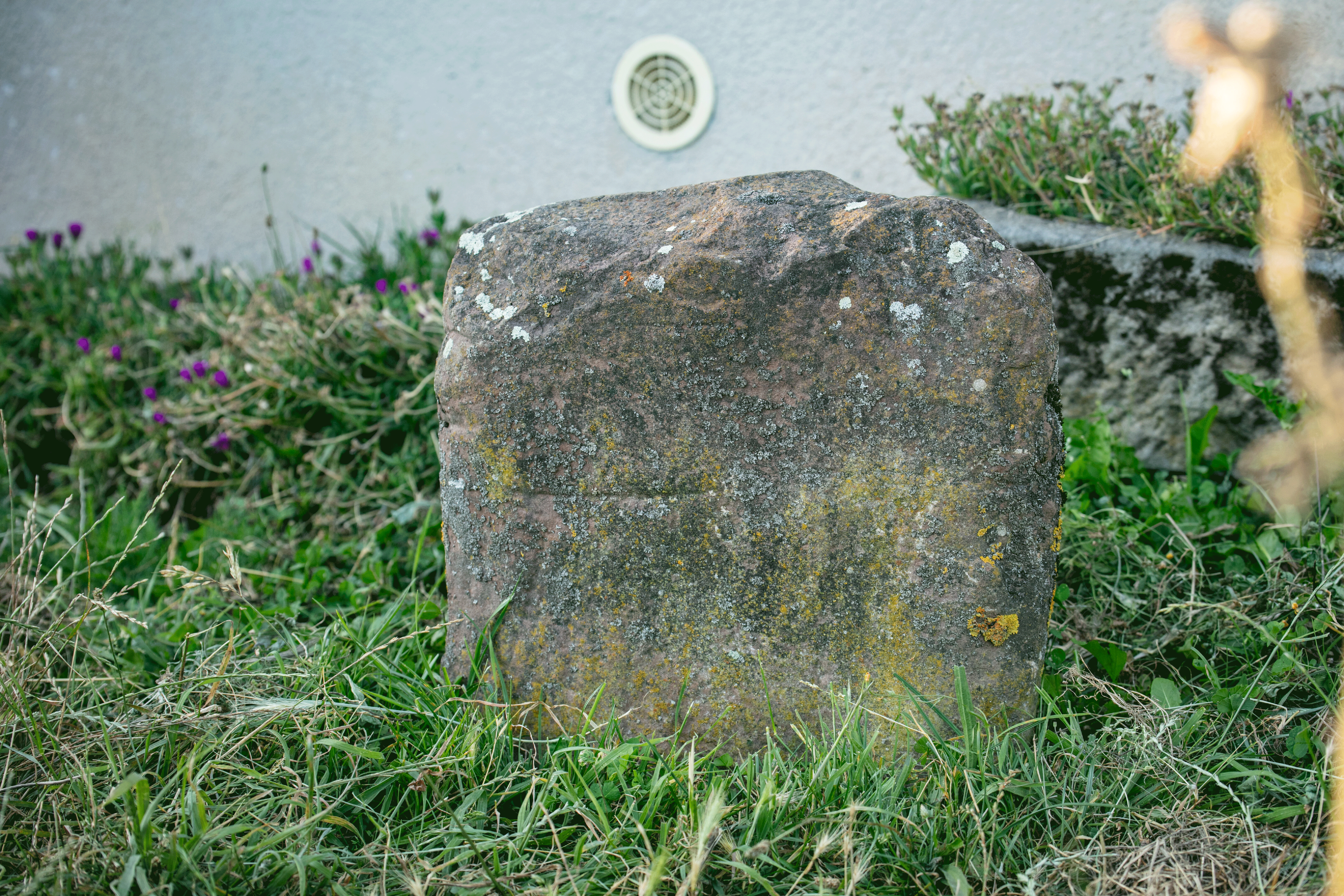
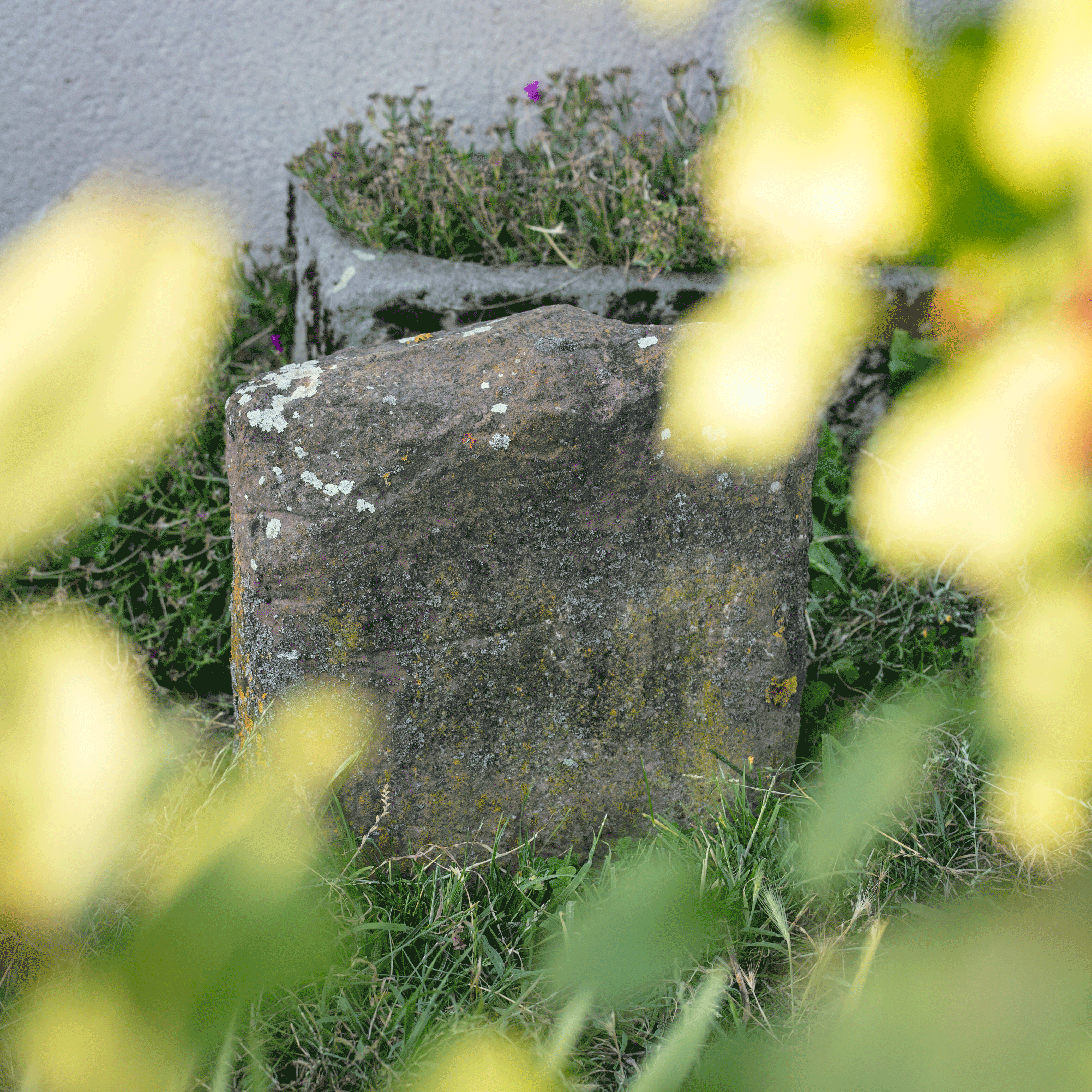
Enigmatic fragment of a red sandstone statue-menhir, discovered in a wall and bearing the traces of legs, feet, and a belt.
Discovered in 2007 on the Puech du Roucan, in the commune of Saint-Salvi-de-Carcavès, the Ouvradous (3) statue-menhir is a fragment of red sandstone measuring 76 cm high.
Found integrated into a masonry wall, it reveals, despite its partial state, valuable clues about its original form: engraved legs and feet, as well as a belt with a rectangular buckle. Its gender remains undetermined, but these elements suggest that it once belonged to a complete human figure, just like its neighbors Ouvradous 1 and 2.
Authenticated by Jean Lautier in the year of its discovery, this piece testifies to the megalithic richness of the Haut-Languedoc, where each new find sheds a little more light on the mystery of the Neolithic peoples.
Discovered in 2007 on the Puech du Roucan, in the commune of Saint-Salvi-de-Carcavès, the Ouvradous (3) statue-menhir is a fragment of red sandstone measuring 76 cm high.
Found integrated into a masonry wall, it reveals, despite its partial state, valuable clues about its original form: engraved legs and feet, as well as a belt with a rectangular buckle. Its gender remains undetermined, but these elements suggest that it once belonged to a complete human figure, just like its neighbors Ouvradous 1 and 2.
Authenticated by Jean Lautier in the year of its discovery, this piece testifies to the megalithic richness of the Haut-Languedoc, where each new find sheds a little more light on the mystery of the Neolithic peoples.
Prices :
Free access.
Accepted animals :
No
Menhir statues :
Original