
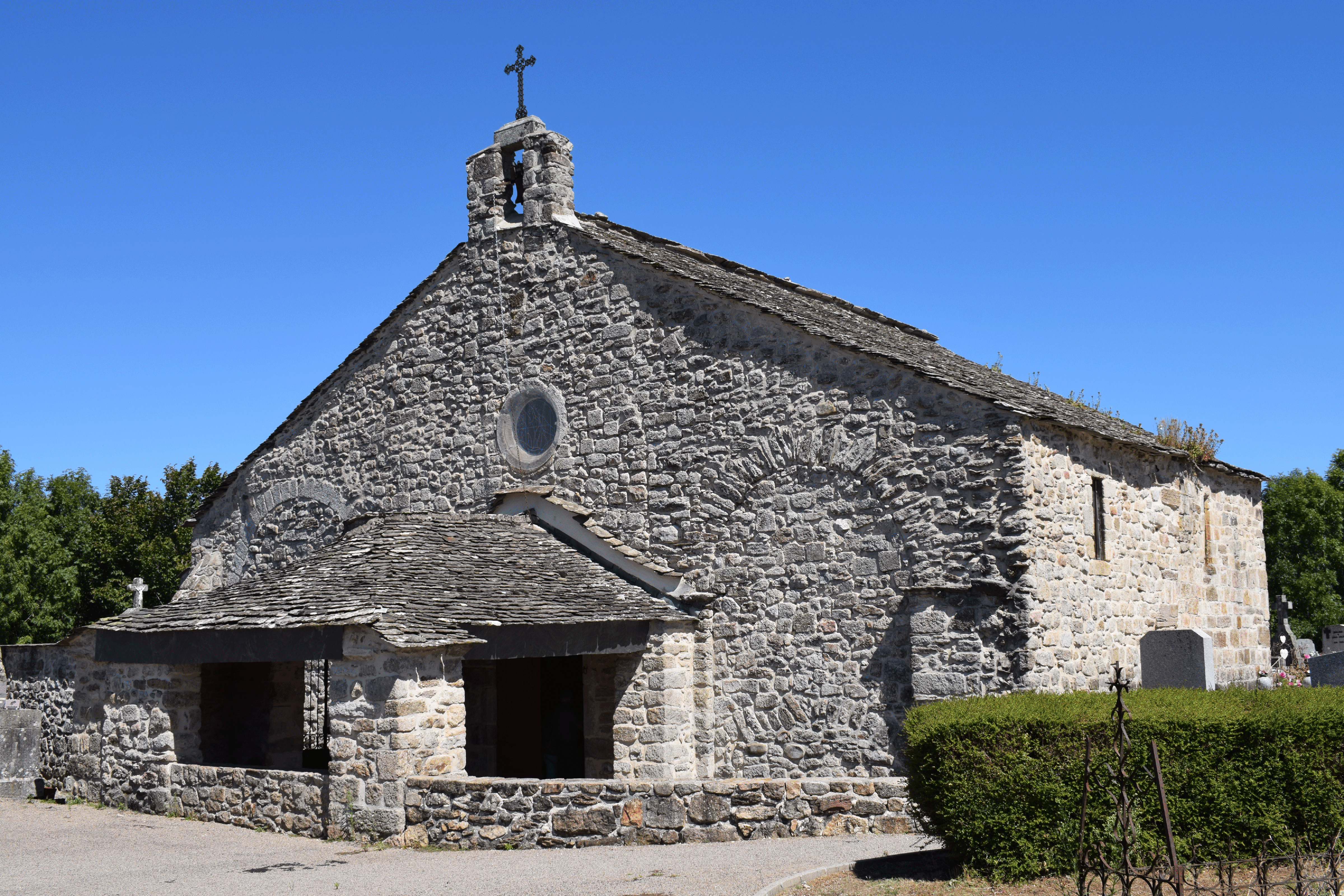
Nestled between two rivers, the Saint-Étienne de Cavall chapel is known for its Black Madonna, visible from outside, and for the legends that still shape local traditions.
At the confluence of the Agoût and the Vèbre rivers, Saint-Étienne de Cavall, also known as Notre-Dame d’Entraygues, has watched over La Salvetat since the Middle Ages. This small Romanesque chapel, listed as a Historic Monument, maintains a mysterious aura reinforced by the presence of one of the smallest Black Madonnas in Occitania. She can be seen even when the chapel is closed, through a small opening in the wall.
Local legends say she was discovered by a cow in a nearby field during a cholera epidemic, miraculously protecting the population and livestock. Since then, the statuette has been deeply venerated and carried in procession every Pentecost.
Between Romanesque heritage, popular traditions and wonderful tales, this chapel is a must-see for lovers of history and sacred heritage in the Haut-Languedoc.
At the confluence of the Agoût and the Vèbre rivers, Saint-Étienne de Cavall, also known as Notre-Dame d’Entraygues, has watched over La Salvetat since the Middle Ages. This small Romanesque chapel, listed as a Historic Monument, maintains a mysterious aura reinforced by the presence of one of the smallest Black Madonnas in Occitania. She can be seen even when the chapel is closed, through a small opening in the wall.
Local legends say she was discovered by a cow in a nearby field during a cholera epidemic, miraculously protecting the population and livestock. Since then, the statuette has been deeply venerated and carried in procession every Pentecost.
Between Romanesque heritage, popular traditions and wonderful tales, this chapel is a must-see for lovers of history and sacred heritage in the Haut-Languedoc.
Prices :
Free access.
Accepted animals :
No
Equipments :
Car park
Free car park
Categories :
Listed